
Discover the unparalleled quality and exceptional customer satisfaction that sets We Clean Homes apart on its journey to becoming the premier home cleaning service in the UK. Request a quote today and experience the difference Michael Shaw, the visionary founder and managing director, is making in redefining industry standards.
Should I Give My Cleaner a Key? What Most Homeowners Do
Michael Shaw • November 8, 2025
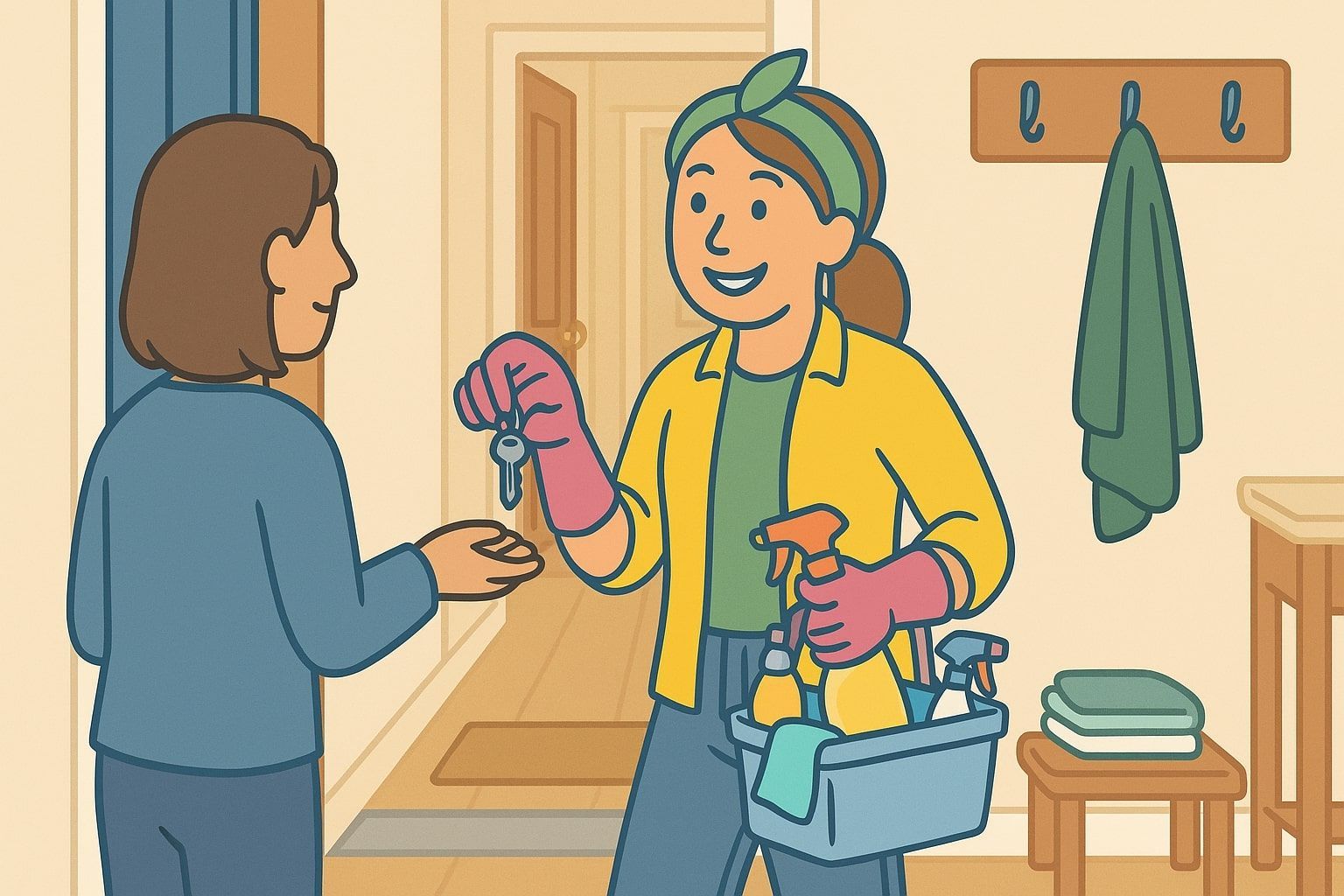
Deciding whether to give your cleaner a key can feel like a big step. You’re not just arranging a service – you’re inviting someone into your private space, sometimes when you’re not even there. It’s completely normal to hesitate, even if the cleaner comes recommended or works for an established agency.
This guide walks through what most homeowners actually do in the UK, how to judge when you’re ready to hand over a key (if at all), the security steps that make key access safer, and the alternatives if you’d rather keep things more controlled for now.
Do most people give their cleaner a key?
In practice, many households with a regular cleaner do end up providing a key or another form of independent access (such as a key-safe code or building fob). This usually happens after a short “settling-in” period where you get to know the cleaner and see how they work.
Why people often choose to give key access:
- Convenience: You don’t have to rush home, take time off work, or rearrange your day.
- Fewer cancellations: If you’re stuck in traffic or delayed at work, the clean can still go ahead.
- Consistency: Cleaners can plan their route more efficiently when they aren’t dependent on you being in.
- Less stress: You’re not constantly thinking, “I need to dash back to let them in.”
That doesn’t mean you must hand over a key. It simply means you’re not unusual if you eventually decide that independent access makes life easier once trust is established.
How do I know if I can trust my cleaner with a key?
There isn’t a set number of visits before you “should” hand over a key. Trust builds from a mix of behaviour, communication, and your own instinct.
Positive signs you may be ready
Look for these indicators over the first few visits:
- Reliability and punctuality
- They arrive when they say they will, or let you know if they’re running late.
- Cancellations are rare and are communicated clearly.
- Professional behaviour in your home
- Your belongings are handled with care.
- They don’t pry into private areas or open cupboards they don’t need.
- They leave things tidy and in a predictable way.
- Good communication
- They respond promptly to messages or calls.
- They check before making changes to the routine or products used.
- They are honest if something goes wrong (e.g. an accidental breakage).
If you’re still at the stage of choosing between candidates, it helps to go in prepared with clear questions to ask before hiring a cleaner so you can judge reliability, attitude, and professionalism from the outset.
Red flags to take seriously
If any of the following happen, it’s sensible to pause before offering key access, or even reconsider the arrangement:
- Unapproved guests turning up with them
- Casual or careless treatment of your possessions
- Regularly turning up late without explanation
- Changing times last-minute more than once or twice
- Stories that don’t quite add up
Trust doesn’t have to be perfect before you give a key, but it does need to feel stable and grounded.
Is it safe to give a cleaner a key?
Giving someone a key always carries some risk – just as it does when you give a key to a pet sitter, tradesperson, or friend. The aim is to reduce that risk to a level you’re comfortable with using simple, sensible safeguards.
Essential security steps
Here’s a practical checklist many homeowners find reassuring:
- Use an unlabelled key
- No name, no address, no phone number.
- If the key is lost, it should not be traceable back to your property.
- Keep your own record
- Note when you handed over the key.
- Write down any codes or special instructions you’ve shared.
- Ask about insurance
- Many self-employed cleaners and agencies have public liability insurance that covers accidental damage.
- You can ask for evidence politely, especially if you’re handing over keys.
- Set boundaries clearly
- Specify any rooms that are off-limits.
- Explain if there are drawers, cupboards, or home offices that must not be opened.
- If needed, lock doors to areas you want kept private.
- Consider a key-safe
- A wall-mounted key-safe with a code can be more secure than someone carrying your key in their pocket or bag.
- You can change the code if the arrangement ends or circumstances change.
These steps don’t remove all risk, but they make your arrangements more controlled and professional.
What if I’m not ready to hand over a key?
You don’t have to rush this decision. Many people prefer a phased approach.
Practical alternatives while trust builds
You could:
- Be home for the first few visits
- This is very common in the UK.
- You see how they work, how they treat your home, and how you get on personally.
- Use a key-safe from day one
- You only add the key to the safe on the day of the clean.
- You can remove it immediately afterwards and even change the code if you wish.
- Ask a neighbour or family member to let them in
- Works well in close-knit streets or where someone is usually at home nearby.
- Arrange overlapping arrival times
- For example, you leave 15 minutes later for work on cleaning day so you can let them in and go through any notes.
There is no “right” speed. Some homeowners give key access after two or three cleans; others wait several months. Your decision timeline is yours alone.
Does giving my cleaner a key improve the service?
In many cases, yes – not because cleaners try harder when they have a key, but because the logistics become smoother for everyone.
Benefits of independent access
- Fewer missed cleans
- If your train is delayed or a meeting overruns, your home can still be cleaned as scheduled.
- Cleaner can work without interruptions
- An empty house often means they can move more quickly and systematically.
- Better long-term consistency
- It’s easier for cleaners to keep your regular slot when they’re not dependent on you being in.
- More flexibility for you
- You don’t have to build your week around letting someone in.
If you understand what to expect when hiring a professional cleaner – from typical timings and routines to how they handle alarms, pets, and products – it often becomes clearer why key access can make the relationship more reliable rather than more risky.
How do professional cleaners usually handle keys?
Experienced cleaners who work in multiple homes often have clear routines for managing keys and access details. While every cleaner is different, many follow similar principles:
- Keys stored separately from any client names or addresses
- Keys kept in a specific pouch, ring, or organiser (often coded, not labelled)
- Immediate return of keys if a client ends the service
- No copying of keys without explicit permission
- Following access instructions precisely, including alarm codes and lock-up routines
- Not sharing access details with anyone else
If you’re unsure, you can simply ask, “How do you usually handle your clients’ keys?” A professional should be able to explain their process confidently and calmly.
When is the right time to decide about key access?
For many households, the decision comes after seeing what usually happens on a cleaner’s first visit and a couple of follow-up appointments. That first session is often when you get a sense of their working style, how they move around your home, what they do if they’re unsure about something, and how they treat your belongings.
A few helpful questions to reflect on:
- Did they arrive on time and leave on time?
- Did they ask sensible questions rather than guessing?
- Did they respect closed doors or obvious private areas?
- Did you feel more relaxed or more anxious once they’d gone?
If the answers are positive and consistent over a handful of visits, you may feel more comfortable introducing some form of independent access.
Step-by-step: a safe way to give your cleaner a key
If you’ve decided that you’d like to go ahead, it can help to follow a simple, structured process:
- Finish a short trial period
- Aim for at least 2–4 visits so you’ve seen consistent behaviour.
- Have a clear conversation
- Discuss:
- Which doors they should use
- Any alarm or security system steps
- Rooms or cupboards that are off-limits
- What to do if something goes wrong (lost key, lock problem, breakage, illness)
- Provide an unlabelled key
- No personal or address details attached.
- If you’re worried, consider using a key-safe rather than handing over a key to carry.
- Write down the details for yourself
- Date you handed over the key
- Any codes or instructions shared
- Agreement about what happens if the key is lost
- Check in after a few visits
- Ask yourself:
- Has anything felt uncomfortable?
- Has the cleaner continued to be reliable and respectful?
- Do I still feel okay about them having access?
If anything feels off, you can change the arrangement: switch to a key-safe, ask for the key back, or, in more serious cases, end the service and change the locks.
Final thoughts: should you give your cleaner a key?
Most homeowners with a regular, long-term cleaner do eventually allow some form of independent access, whether that’s a key, fob, or key-safe code. It often leads to:
- A more dependable cleaning schedule
- Fewer missed or rearranged appointments
- Less stress about timing and access
However, your comfort comes first. You don’t owe anyone a key just because “most people” do it.
- Take your time.
- Watch how your cleaner behaves over several visits.
- Put simple security measures in place.
- Keep communication open and honest.
When the decision is based on observed behaviour, clear boundaries, and practical safeguards, giving a cleaner access to your home becomes a logical next step rather than a leap of faith.
Author

Learn which tasks cleaners don’t typically do, why these limits exist, and how clear expectations help create a smoother, more stress-free cleaning experience.
Discover the key differences between end of tenancy cleaning and deep cleaning. Learn what each includes, when to book them, and how to choose the right service.
Unsure between a spring clean or a deep clean? This guide explains what each service includes, when they’re needed, and how to pick the best option for your home.
Discover what a professional deep clean includes with this UK-focused checklist. Room-by-room tasks, optional extras, and tips to prepare your home.
A simple UK guide explaining what a one-off clean includes, how it differs from regular cleaning, and when to book one for a quick home refresh.
Discover what a standard clean includes with this clear room-by-room guide. Learn typical tasks, what’s not included, and how standard cleaning works in UK homes.